Ad

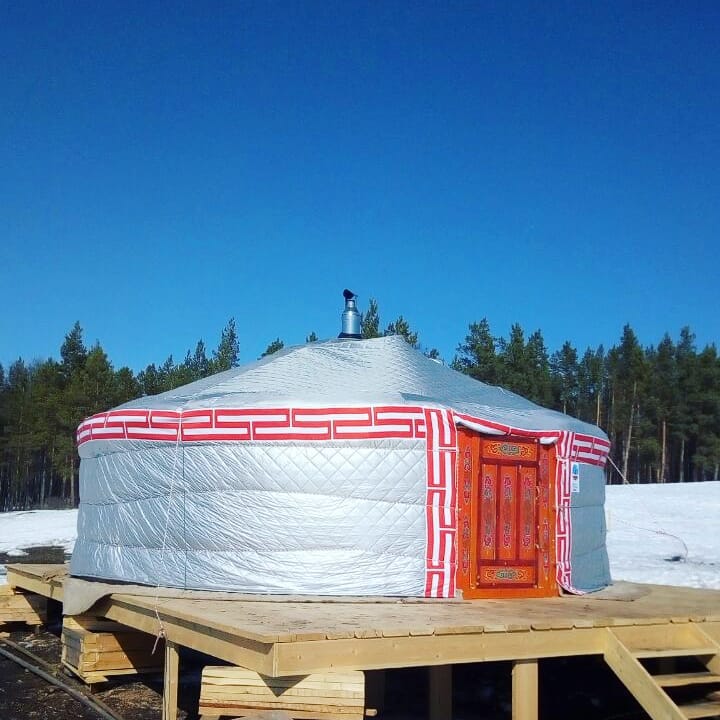
New, modern yurt build in Mongolia

Continuing the topic of winter life in the mountains in a 'ger' (yurt), I thought I'd add something about clothing.

As a holiday present my wife had a winter 'deel' made for me. It's a traditional robe worn by Mongolians for eons. I got the winter one, lined with sheepskin. It can be made with lambskin but it costs 2x more. This cost US$230 custom made for me.
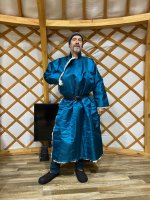
new deel full body pose.jpeg

Pros: Subjectively it looks pretty badass. It's very long and will cover my boots. You can just throw it on right out of bed and go outside.

Cons: it's freaking heavy. It's made of sheepskin, not just the wool, plus the outer textile material. The weight is 4.5kg (10lb) and you feel it. Not very well sealed from wind which can blow underneath. Not as warm or as light as a down parka but more durable. Not as flexible as a parka and a bit of trip hazard. The sheepskin is still stiff. I hope it breaks in.

Typically I've been a fan of down mountain parkas from way back in the UK, USA and in recent years in Mongolia. I've got 3 now. My go to parka is a Rab brand (UK company) which I got cheap second-hand from my nephew who lived in Mongolia and then left. I think I gave him about $50. I've done tons of mountain climbs or just city walks to work. I still use it if it's not awfully cold.

older raab and hat.jpeg

Pros: it's pretty warm but requires layering if it's colder. Decent for hiking when you don't want to overheat. The hood covers part of your face too. It's light and highly compressible.

Cons: it uses a light fabric which is prone to cuts and tears but can be patched if not too bad. It uses sewn-through panels which causes some cold spots.

I always have a wool and fleece hat. If I'm going to climb an exposed mountain, I'll take dual-lens goggles because the wind chill is killer. In the next photo it was only -25C but there was a high wind. I needed to cover every bit of my skin. A fleecy balaclava is also essential to cover everything the goggles don't cover.
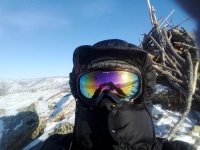
extreme cold and wind.jpeg

I recently got some locally made boots for about $90. I wear them on the daily. They are cowhide are fully lined with fur. Dog fur, I think. This photo also shows my fleece leggings which I usually wear under jeans or work pants.

Pros of the local boots: slip on, very warm, socks are optional, good lugged soles.

Cons: They wouldn't be a great choice for hiking far. They are a bit loose and can't be tightened much at all. Snow gets in unless I put my pants over the boot.

If I'm going hiking, I'll wear some Columbia winter hiking boots which use synthetic insulation. "Thinsulate" maybe and a reflective lining. For snow, you'll want a gaiter to seal out the deeper snow.
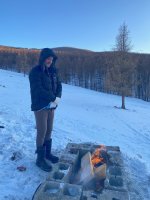
old raab and new boots.jpeg

In preparation for moving to the mountains, I decided to upgrade my old down parka with higher performance Rab mountaineers parkas. They have a higher loft filling and use box construction instead of sewn-through, so no cold spots. Also I got one for the wife. They cost about $370-400 new.
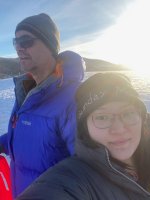

couples new raab jacket.jpeg
new raab jacket.jpeg

Pros: extremely light and compressible. Extremely warm. Good hood with some face protection. Perfect for all day or night outside activities.

Cons: the nylon is even lighter than my previous jacket and can be snagged, torn very easily. I have to be careful what kind of activity I do. Construction is out of the question. Sometimes too warm and I don't think I'd hike in it but I'd probably pack it in case I need it.

Finally, to gloves. I don't have anything mega special. I generally wear some cheap wool and fleece gloves. An overglove can be added if I'm out for a long time and/or it's very windy. Generally, I just put my hands in my pockets if they get too cold, if possible.

My daily gloves are the cheap (about $10) wool and fleece lined ones in most photos. These are adequate for a short time.

The Columbia winter gloves came with fleece liners but I'd probably swap them for the wooly ones and liners if it got extremely cold and windy.

This is how they originally came:
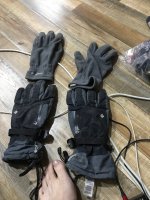
Columbia gloves with fleece liners.jpeg

But I've found this a better combination in the worst of weather:
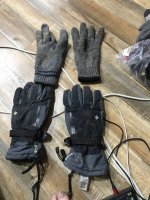
Columbia over gloves and wooly-fleece gloves.jpeg

I bought some electric glove liners but one has failed already. I'll try to fix it because there was some merit to this method with an overglove of course.

Regarding socks, I just use hiker socks (smartwool, etc) or some heated socks I got last year. Nothing special to say about those. The heated socks are pretty good when inactive but for hiking they'd probably wear out too quickly. Wool is better for hiking.

For me, my hands are the most vulnerable. Then feet. I'm almost never cold in my core area. That's probably pretty normal for humans but my hands get numb probably sooner than most people. I may buy some locally made fur mittens. The winter is far from over.
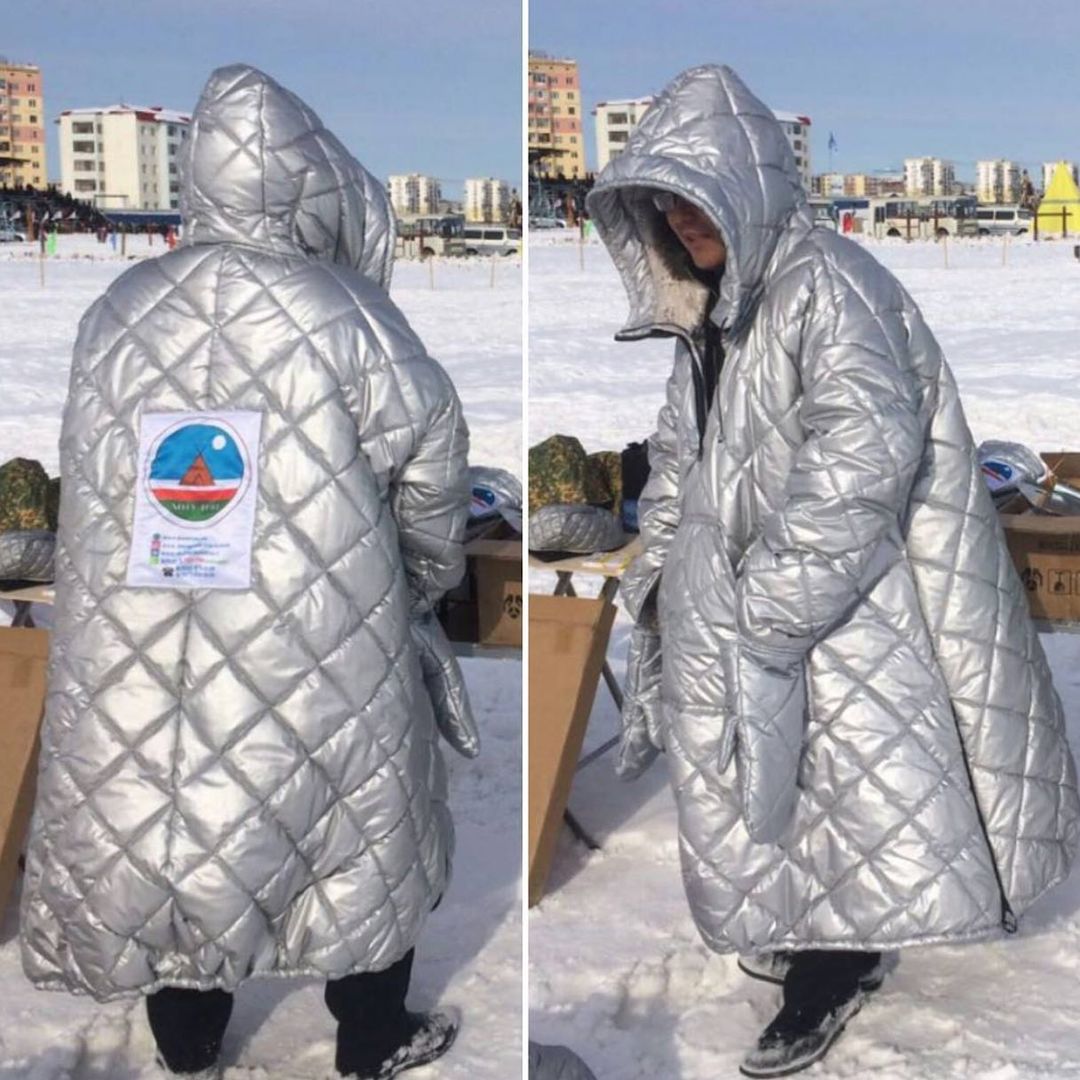
 
My recommendation:

https://tritongear.ru/

I´m sure, that this stuff - if used in onion principle - will meet your expectations....

https://tritongear.ru/muzhskoj-assortiment/


Last possibility would be clothes from this supplier:

hotutentru-image-2021-12-30-1-12.jpg


They have nice thermo-hoods for Yurts too:

instasaver-01172240-1-1.jpg
 
Thanks for the recommendations. I think we're pretty good on winter clothes now EXCEPT maybe gloves. I like the mitts on the coat and how they are connected to the jacket.

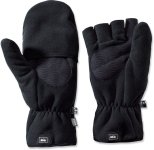
I like fingerless gloves with over mitten covers. I used to have some of these (from a company called REI) years ago. Good when you need to use your fingers but not really warm enough for Mongolia. An over-mitten would be needed for our winter, preferably.

fingerless gloves with mitten cover.jpeg

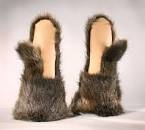
This is what I might look for locally. Fur mittens. Can be worn with a thin underglove then held near the sleeves with a loop through the inside of the coat.

fur mittens.jpeg

Any yurt cover would have to be custom made for our 'gers'. It's very non-standard shape. However, I think it's actually quite well insulated already. We added thick, interior, door curtains for the glass doors. Nothing for the windows yet. These glass areas are the zones of greatest heat loss (doors, windows and crown). We've got single layer canvas covers for the crowns but they go on the outside. That's a hassle to take on and off every day. Our gers are very tall. We benefit from the sun in the day so we'd prefer an interior solution.

I do feel a cold draught around the bottom ring. I piled snow around the bottom edge to a depth of about 30cm and it helped a bit but didn't completely stop the draught. An insulated, windproof skirt to seal the bottom of the canvas might help a lot.

I'll be thinking of improvements to better insulate but probably for next winter. Maybe I can do window covers this year because winter is long here and it might reduce my electric bills and pay off that way.
 
Thanks for the useful posts U.K. You're getting it worked out.

These comments have nothing to do with yurts.

It's been in the teens F here. This house is well insulated, but has a lot of large windows. I turn the stat down to 62-66F to save money.

I heat up a microwaveable bean bag and toss it under the covers for extra warmth at night. My wife's been using her electric blanket. Both work fine, but I like the bag better because it's a concentrated heat source I can shuffle around as needed.

I've also been burning a lot of wood. That only heats the LR kit dining area, which is about the size of a 30' yurt. Bedrooms are cold with the stat down at 62. The supplemental heat is nice.
 
Just got back from an ice fishing trip out of state with my son. -10f in the A.M. The vrbo house trailer he rented had a very nice ~2 cu ft airtight wood stove in the LR. Lined with fire brick, glass window in loading door. Burning totally dry ponderosa pine on low, extremely pleasant LR DR KIT in the house trailer. Adjustable air going in. No flue damper seen. Burned about 1/4 the amount of wood I do in our fireplace. VERY efficient burn, nice and slow, and plenty warm. NO creosote, the wood was bone dry.
 
Last edited:
Sounds like a great wood stove. It's amazing how far burning wood has come and the developments haven't stopped because there's plenty of people who still have wood as a primary heat source.

I could use ours to heat our gers but I'd have to stay up all night to feed them. So it's our very nice secondary source of heat. We're still around -30C (-22F) at night but the days are very warm and sunny at around -10C (14F). It feels lovely after temps down to the -40's (C and F) low and -30's (-20's F) high.

Spring is in the air.

I used to fish but haven't for years. You have to travel a bit for river fishing here but they have some massive trout called 'taimen' and I think they fly fish. I might get my hand back in but it'd be a summer activity. No lakes near here. No tour for me, just friends. The tours are pricey $7k! Not including airfare to Mongolia. Probably another $2k from the USA.

https://www.orvis.com/mongolia-river-outfitters-fish-mongolia/2BNK.html#:~:text=Mongolia%20can%20be%20an%20excellent,ancient%20and%20beautiful%20Siberian%20trout.
 
"..there's plenty of people who still have wood as a primary heat source."

Damn straight.

I fly fish mostly, and bait fish with my son.

$ :come up with a number: K is just a bit out of my league too. lol
 
Last edited:
Thanks. We're all good. I hope you and yours are doing well too.

We've been busy. We went commercial with our home as a tourist camp. We started a bit late in the season (1st week of August) but have had a steady, but small, number of bookings. We're only offering 2 gers at this point. One for a couple and the other for up to 4 guests. We hope to keep getting guests maybe even into winter. So far we have bookings into early October.

I made improvements to the modern gers but we also fixed up 2 more traditional, Mongolian gers for guests.

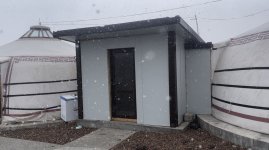
A couple of improvements to our modern gers were adding exterior metal corner trim pieces to the bathroom/hallway. Before, the ends of the steel sandwich panels were exposed, showing the EPS, and looked a bit ghetto. Sort of like this, but I added door trim (brown sheet metal too) more since this photo. Looks much nicer than before.

bath house trim.jpg

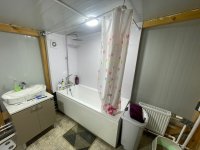
We put an enclosure around the bathtub so it'd be suitable for taking stand up showers. Plus a shower curtain.

bathtub surround.jpeg

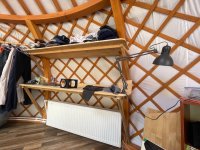
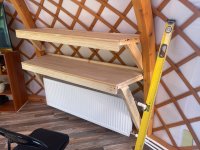
Also, I finally put up shelves and desks. More of those to come.

bedroom shelves.jpeg
living room shelves.jpeg

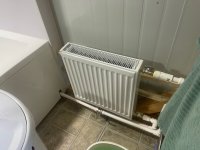
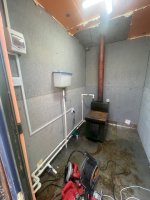
The biggest project was an entirely new heating system. The electric heating supplemented by wood stoves was too expensive to run last winter and not even that warm on the coldest nights. So I had a semi-coke briquette boiler installed in a partitioned room in one of the shipping containers. It's got 5 radiators, either large or small, depending on the room size, running anti-freeze. It should cost 5-10% of the cost of electricity to run and it cost $3k installed. Hopefully, it'll pay for itself by the 2nd winter and be more cozy too. In exchange for a little work, I should be able to save >90% of what last heating season cost.

bathroom radiator.jpeg
boiler room.jpeg

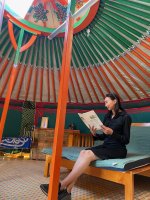
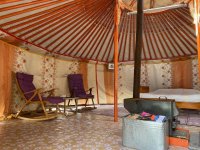
The 2 Mongolian gers are looking really nice inside. For winter guests, we'd need to add an extra layer of felt and convert the wood stoves for semi-coke briquette use and airflow control on the flue. It's essential to have a full night's burn which is almost impossible with wood. Coke can do that and costs far less. They look like this inside (outside they look pretty standard:

4 bed ger.jpeg
couples ger.jpeg

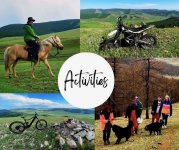
We offer activities, such as hiking, horse riding, e-bikes (electric dirt bikes and mountain bikes), archery, ping pong, etc. I'm really enjoying having guests on a small scale and it gives us a little income stream.

activities.jpeg

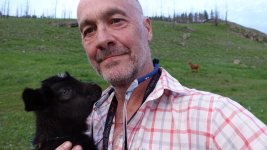
I traded a cheap Chinese herder motorcycle, which I didn't like anyway, for 2 horses and we got a couple of cashmere goats (mother and kid) free from one of my wife's herder relatives. It's made life interesting. Baby goats in particular are hilarious.

DSC00071.jpeg

We think there's a good future in adventure tourism, so it's something we'd like to pursue. I think we'll be much better prepared for the high season next year.

I actually know the YouTube couple "Simple Wild Living". We've chatted and shared tips and tricks but have yet to meet in person. He's doing some interesting projects but we're taking a different approach. It'd be nice to grow our own veggies though! His interpretation of "wild" is not the same as mine.
 
Last edited:
Thanks for update. Very nice place you have there UK.

My Hungarian friend Bela heated his small mountain house with coal burned in an old school late 1970s Fischer wood stove, that he retrofitted into his old fireplace. He burned wood in that fireplace many years. His old wood bin got turned into a coal bunker.

Burn time differential wood to coal I do know know, he just said coal burned longer. Cost wise beats me, I never asked. Heating with coal was a WHOLE lot less work vs cutting and splitting wood. He was fit in his retirement years, but regardless, making a wood pile is a LOT of work.
 
Thanks for update. Very nice place you have there UK.

My Hungarian friend Bela heated his small mountain house with coal burned in an old school late 1970s Fischer wood stove, that he retrofitted into his old fireplace. He burned wood in that fireplace many years. His old wood bin got turned into a coal bunker.

Burn time differential wood to coal I do know know, he just said coal burned longer. Cost wise beats me, I never asked. Heating with coal was a WHOLE lot less work vs cutting and splitting wood. He was fit in his retirement years, but regardless, making a wood pile is a LOT of work.

You're welcome. I was starting to feel it had been a long time since I posted anyway. Your reminder prompted me to post. Cheers for that.

The general rule of thumb is you can get a far longer burn with coal/coke than with wood. Unless you have a very sophisticated wood boiler.

We have unlimited fallen wood in the forest next to us but the whole process of cutting, splitting and seasoning is a massive amount of labour. My back isn't great either so I'd have to pay somebody and that defeats the savings of doing it myself. Firewood is widely available but I don't think it's properly seasoned and/or stored here. It costs $2 per 10-12kg (22-26lb) bag. The last batch was a bit damp. Maybe they didn't store it well over the wet summer months. I don't have a moisture tester so I'm unable to test the moisture content.

In contrast, semi-coke costs about 20% of firewood by weight and burns longer and cleaner. It's essentially smokeless once going. Firewood is nice in a glass fronted stove and we'll still use it as a backup and some is needed to start the semi-coke burning.

By the metric ton (2200lbs) the price here is:
firewood = $200.
semi-coke = $40.

However, it's all about availability and price. You can't use what's not available and you don't want to pay too much for your heating unless there's huge benefit like convenience. I'm definitely willing to trade a bit of inconvenience for huge savings. But the inconvenience of dealing with semi-coke is nothing compared to making our own firewood.

Coal/coke price depends on whether it's local or how local. Mongolia has massive coal reserves but no gas/oil production. So coal - processed into semi-coke briquettes - is a no brainer and is the most used energy source that powers and heats the entire country. We can buy semi-coke bags from a store about 5 miles from our place once per week. I can pickup and deliver it myself which is also a big saving.

Wood is mainly used by nomads and other yurt dwellers, but is probably imported from Russia, just like LPG (propane) and oil, benzine, diesel. So it's expensive. LPG and diesel are about $1 per liter or $4 per US gallon. I use diesel for my truck and LPG for cooking and backup heat. It's costly so I try to limit my use.

Some folks swear by wood pellet stoves because they can have auto-feeders (augers) which can give you all night and day burns, but their mechanical complexity means they are prone to breakdowns. We don't even have a good supply of wood pellets so it's not even an option here.

So far, our coke boiler with radiators seems to be promising but it's not super cold yet so we won't really know if it's sufficient for our needs until December/January. If not, we have multiple supplementary means of heating.
 
Some folks swear by wood pellet stoves because they can have auto-feeders (augers) which can give you all night and day burns, but their mechanical complexity means they are prone to breakdowns. We don't even have a good supply of wood pellets so it's not even an option here.


I have a pellet stove in my home, though I hope to retire it now that I have mini-splits (we'll see). Mechanically, I have had little problems over 12 years. I had to replace the igniter once (should always have on on backup anyway) and the auger motor and blower motors. That was for 12 years worth of use. Only the igniter went out without warning. The motors let you know that they are on the way out generally just by listening to them.


If you can get the pellets and have the electric to run the stove, they are a good option.
 
I have a pellet stove in my home, though I hope to retire it now that I have mini-splits (we'll see). Mechanically, I have had little problems over 12 years. I had to replace the igniter once (should always have on on backup anyway) and the auger motor and blower motors. That was for 12 years worth of use. Only the igniter went out without warning. The motors let you know that they are on the way out generally just by listening to them.


If you can get the pellets and have the electric to run the stove, they are a good option.

Well, they always say YMMV.

I was just going by what the "Embers Living" YouTube channel says. They are a retail BBQ and fireplace store in Denver, Colorado.

From my impression, they sell all kinds of stoves and fireplaces but report far higher failures on wood pellet stoves. I mean it stands to reason since they have far more moving parts. The most basic stove has few or no moving parts.

His points on long term reliability:

-WOOD
- Its pretty hard to beat the reliability of a wood stove. The reason is, there isn’t much to them, and very few moving parts. So you won’t get stuck in the cold in the middle of winter without any heat.

PELLET-
- This is where pellet stoves become a real pain. There are so many moving parts and electronics, and the issue is. If just one of them goes out, the pellet stove is completely non functional. Which is a huge drag if you wake up in the freezing cold, and then could be out a heater for a month or so if parts needed to be ordered. So it turns into a giant paper weight.


My thoughts, I suppose if you handy with maintenance and spare parts are easy to come by, have electricity, and a good source of pellets, they are worth considering.

We can't consider them at all due to no supply of pellets locally. I don't think they even sell pellet stoves here but I suppose you could import one. Then you wouldn't be able to run it.
 
Last edited:
I know zip about pellet stoves.

We have ~ 3.5 cords of ponderosa pine stacked out back. My labor got it from where the trees grew to those stacked cords. A LOT of work, but good healthy outside work in fine clear crisp fall weather.

We just harvested a bushell of apples last Sunday at an orchard up north of us. In fact this morning my wife and I made up a pot of apple sauce in the slow cooker right now. Pork chops and apple sauce tonight. Man I LOVE this time of year. And our son cbow shot his 6x6 bull elk last Sunday night. MMMM mmm that is gonna be some PRIME eating.
 
Last edited:
Country life is pretty amazing.

I’ve no idea what a cord of wood is. I thought the UK had weird, archaic measurements but the USA leads the way.

Luckily there are converters online. It seems like 3.5 cords is 12.8 metric tons. That’s enough to heat an Arctic village. LOL.

I love burning wood and I wish it burnt all night. Unfortunately it doesn’t. So we use it while we’re awake. While we’re asleep semi-coke should do the job.
 
I have a couple full cords at my yurt camp. We do about 1 cord a season there in my wood stove.

I think the pellet stoves are not ideal for yurts because they are forced air heat, whereas coal and wood stoves are radiant. Much better solution for that use case. If you were in a tightly insulated house like most new construction in the US is, then forced air is actually much more efficient or so I am told.
 
UK, the dimension of a cord is 4x4x8.

My small 'fireplace insert' size (~1.5 cu ft) air tight 1980s era Sierra Cricket wood stove I used in my yurt would burn about 1.5 hours damped down. Doors open and fire raging it would burn about 3/4 hour. All night burn ain't gonna happen with that little twinkie.

Some bigger air tight old school late 70s early 80s no catalyst, no secondary burn, stoves were not all nighters either. I worked out of a welded steel stove manufacturing shop my boss owned in 1980-1982. I was a carpenter working out of his shop and not involved with the stove end of things. But those air tights beat the heck out of any open fireplace for burn time. Our non airtight fireplace blows through our wood pile. I go through a couple dozen of sticks a night, and WAY more over all day burn during holidays.
 
Last edited:
My wife and I lived in an apartment back in the 80-82 period in WY that had a non airtight Franklin stove in it. It also went through the wood pretty darn fast, but not as fast as an open fireplace.

Old school all brick and masonry fireplaces like my parents had were great for holding the heat in the huge masonry mass though. Once warmed up it didn't take all that much wood for a nice long evenings fire.

Our open fireplace in this house I built in 2000 is a manufactured POS unit that was fast install and very little mass except for firebrick. It >totally sucks< in comparison to the old school masonry fireplace I grew up with.

Lastly assuming money is no object, a Rumford all masonry is the winner. Very old design and as perfect as can be for open fire.
 
Last edited:
Yes, thanks for the explanation. A cord is an archaic but still useful measure of a volume of a wood pile. It works well for people who cut and store wood.

Wood stoves / furnaces have come a long way in terms of efficiency but we still have the issue of energy density.

Here are some interesting numbers from a scientific study - the numbers give an indication of energy density in Millions of Joules per kilogram:

Smokeless coal
28Mj/Kg
Kiln dried wood
15Mj/Kg
Seasoned wood
15Mj/Kg
30% Wet wood
12Mj/Kg

Local pricing is:
Semi-coke briquettes
$0.04 per kg.
Firewood (unknown moisture content, might/might not be seasoned)
$0.21 per kg.

But to get the energy density of semi-coke, I'd have to get 2kg of wood compared to 1kg of coke.

Smokeless coal (I think my semi-coke briquettes are a similar coal product) has roughly double the energy density of the best wood. Kiln dried or seasoned doesn't seem to make much difference.

Then we get into stove / furnace efficiency which is important too. Good numbers are >80%. I believe my wood burners are in that range.

Obviously, operator efficiency is important too. There seems to be quite a bit of skill in controlling airflow with flues and flaps, etc.

Locality makes a huge difference. In our case, coal products are cheap and available. This is not the case everywhere. In fact, it may be banned in some regions, even "smokeless". Firewood is much more expensive unless you have "free" supply. We do but I can't manage the work involved. It's a major commitment and when compared to semi-coke briquettes at $40 per metric ton (2200lbs), I can't make a case for it.

In the end, we'll use both firewood and semi-coke. Firewood for a quick warm-up of each yurt and semi-coke for central heating which is slow to warm up but burns all night. Actually, we need a bit of wood to start the coke burning so we'll always use a bit of wood.
 
How's your winter going?

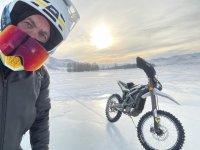
I was enjoying my winter, even modifying my electric dirt bikes to work on snow and ice with ice screws. Lots of fun.

IMG_1482.jpeg

Then disaster struck. The local power station had a failure in the night. Unfortunately, I was fast asleep and couldn't take any steps to mitigate any problems. Off course, Murphy's law dictates that this would happen on one of our coldest nights. About -39C which is a nice temp because Fahrenheit and Centigrade agree on the number more or less. Very cool.

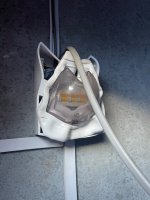
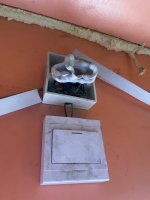
Totally oblivious to what had happened the night before, I went to the boiler room to maintain the fire. To my horror, there'd been a literal meltdown.

IMG_1599.jpeg

IMG_1600.jpeg

IMG_1601.jpeg

IMG_1602.jpeg

Behold various melted plastics next to some unaffected plastics. Interesting. Also the root cause is the pipe going into the boiler tank melted and separated.

The evening before, I had started a coal fire for the central heating. While also running electricity (an immersion coil) to keep the boiler temperature stable. Our system has an electric pump to circulate the water in the pipes to the gers, insulated container and well house.

This is what I think happened: when the power went off the pump stopped circulating the water. The fire doesn't care about that so it overboiled the water, melting the pipe connecting the water supply to the boiler then probably steaming off any water left in the system. Various plastic components melted.

Now with the water just sitting in the pipes it did what water does in these temperatures, it froze. Despite insulation. We'd originally had anti-freeze in the system but due to several over boil incidents, it'd had all leaked out and I had to replace it with well water. Anti-freeze in those quantities is really, really expensive.

My handyman came up on his day off (Sunday), first going shopping for replacement components. That's a big deal and very nice of him since he's very religious.

We worked together all Sunday afternoon and half way through the night to get some semblance of a system going. We thawed out accessible pipes with a blow torch. Bypassed the well house completely because it has 40m of buried pipe with no easy way to thaw them out. He replaced all of the damaged components: a heating coil (now upgraded from 4.5kW to 12kW), a timer, a relay, various melted plastic electrical components, sections of pipe cut out or bypassed.

What have I learned?

You can't depend on the electric grid.

Our boiler is too basic and is incredibly labour intensive. I may upgrade to one of with thermostatic and barometric automation. Also, more capacity for a larger load of semi-coke.

I need a reliable UPS backup for the pump (12v battery, charger, inverter).

Also, some sort of alarm that would wake me up if there's a temperature spike or power outage.

We can survive any temperatures that nature throws at us because we have our dumb stoves and plenty of solid fuel. Or just simply lots of bedding and shared body warmth.

However, the systems with water in them are really susceptible to freezing and I need to be constantly vigilant to keep them above freezing. It's stressful. Maybe the Mongolians got it right by keeping everything basic and no reliance on electricity.
 
Back
Top