Ad

Lightning rod for a yurt in an open field?

Drunken hobbit

New member
Last night there was an electrical storm just a few kilometers from my yurt. And now my mother (who lives in a house in the city) is scared I'm going to be killed by lightning. She's desperate for me to put a lightning rod on the top of my chimney, and earth the firebox.
Do you think it's a good idea?
Yurt is in the middle of an open field.
It has Reflectix insulation, and a steel wood-fire firebox, and steel chimney, so the whole thing is basically electrically conductive!
Wire sheep-fence about 50 yards away. Tall pine trees about 70 yards in the other direction.
I think I'll be okay. There are higher and more interesting things for the lightning bolts to hit.
Would it make me a bigger target, if I earthed the firebox and flue? Or is that a good idea to earth the firebox?
Thanks for your opinions!
 
Well, is the steel chimney supported by a metal pole that is cemented into the ground? Here is how mine is:

https://www.yurtforum.com/forums/building-a-yurt-f3/the-yurt-chimney-137-3.html#post678

I would think any strike would go directly to the fastest route to ground, at least that is how I understand it works. If however, you are running the stack say, straight through the roof, then your mother may have a point. Here is a link to a page where they show how to ground such an install:

Grounding a metal chimney - Fine Homebuilding
 
Our house was hit by lightning last year. Blew a hole in the roof. about 11' from my wife, who was lounging in the bathtub.lol Why it struck where it did beats me there's no metal near the strike point. BTW our house is grounded with a standard grade copper ground rod pounded way into the earth. I should know....I pounded it in myself with a sledge. That's all I got. Sorry, I don't even have a suggestion on this.
 
Our house was hit by lightning last year. Blew a hole in the roof. about 11' from my wife, who was lounging in the bathtub.lol Why it struck where it did beats me there's no metal near the strike point. BTW our house is grounded with a standard grade copper ground rod pounded way into the earth. I should know....I pounded it in myself with a sledge. That's all I got. Sorry, I don't even have a suggestion on this.

Wow! Lightning is weird stuff eh. I remember you telling the story of how you were up hiking in that electrical storm, that was an amazing story too.

I've decided to earth the chimney and reflectix. It will make my mother happy, but what decided me is the link Jafo provided, where the electrician says:
The bottom wire grounds any leftover charge that has followed the chimney and would have nowhere to go except to arc to you
Yeah, no thanks, I don't want a million volts of white hot plasma arc with nowhere to go except wet, conductive me!

If anyone wants to add their opinion maybe years after this post, please feel welcome, it's an interesting topic.
 
I'm actually afraid of lightning after my experiences with it. That time climbing 14ers, now that was flat out terrifying. I just wanted to be back with my family. Way above timberline there is absolutely no place to hide. There is literally no place to crawl into for safety. You are completely exposed and that is what is scary. Hair standing straight up, blue glow on the rocks, metal pack frame singing, rocks singing. Sounds like bs but it's the truth.
 
Our yurt with an amazing view is at 7500 ft with water table perhaps 600 feet below ground. We put it on a concrete foundation and the building inspector reminded our builder to install Ufer ground (rebar post connected to rebar in the concrete - look it up on Wikipedia). An electrician friend gave me some heavy-guage coated wire and clamps to attach the woodstove (with all-metal chimney) to the Ufer ground.

Good luck!
 
This is an old thread but I thought I'd add my tuppence worth.

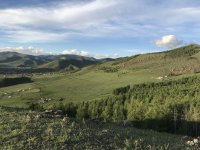
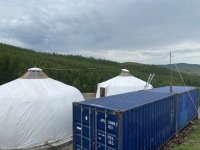
We live in a high valley in the Mongolian mountains about 1700m (5500'). It's grassy and there are few sparse trees then 100m to a forest. My 2 gers were pretty expensive and there are lightning storms frequently in the summer. We have a compound with 2 shipping containers and 2 gers with a gap of about 3m between each ger. We've also got an older traditional ger but I'm not bothered about that. We use it infrequently mainly for cooking when guests come.

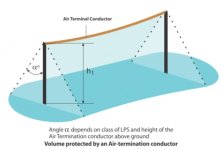
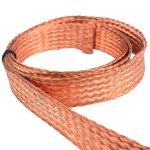
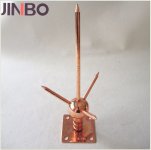
The science, as I've read it, says that lightning can strike anywhere. Although the risk is low. Just because there's a few trees nearby doesn't help much. They recommend having a lightning rod no more than every 6m (20'). I'm going to put a lightning rod on the crown of each ger, string copper braided wire between them, then over to my 2 x 20 tonne, back to back, shipping containers. Each rod will be at 4m height which gives a cone of protection 4m in diameter. That's sufficient for each ger. I bought 3 grounding rods. Which I can arrange as appropriate. Probably in some sort of triangle arrangement.

I think it's cheap protection for a low-risk but potentially disastrous scenario. However, we are in a high risk area. We've had lightning all around us several times already. Just the fear factor alone is worth mitigating.
 
I'm going to put a lightning rod on the crown of each ger, string copper braided wire between them, then over to my 2 x 20 tonne, back to back, shipping containers. Each rod will be at 4m height which gives a cone of protection 4m in diameter. That's sufficient for each ger. I bought 3 grounding rods. Which I can arrange as appropriate. Probably in some sort of triangle arrangement.

That sounds wise for me and I hope you will share pics about.

Edit:

BTW - I remember, that I opened a similar thread a while ago:

https://www.yurtforum.com/forums/yurt-living-f2/yurts-and-lightnings-2117.html
 
Last edited:
95227CED-7A2A-46C9-8714-B1436652F196.jpg

A4B9CD38-92E1-4BFB-AA59-6236FAE0B4F1.jpeg

0B48A3EE-0821-43BE-B4C7-8692A11BA942.jpeg

Thanks for the reply. I’ll post the photos of the actual finished project later this week.

I added a link to the diagram of the theory. It only shows 2 connections but I may have 3 roof rods and 3 air terminals (copper wire between) so it’s not exactly the same.

We don’t have our wood stoves connected yet. I’ll probably need to ground the chimneys too after they’re installed if they are tall enough. Not sure yet.
 
Last edited:
Grounding your yurts is a good plan.

Homes here in the U.S. are grounded, by code. I have a 10' copper rod pounded 7' into the ground and our house is fully grounded to that. In addition, it is a code here to ground the iron natural gas pipe to the copper plumbing system. All electricity is shunted to the earth. This is all code checked and there is no kinda/maybe about it. Lawsuit happy we are.

However, that said, we had a lightning strike on the roof of our house a few years ago. It literally blew a hole in the roof directly above my wife as she was taking a bath. Freaky. A couple breakers tripped off. The terminals at the upper and lower stair lights got fried.

We also have surge protectors for the computer, TVs etc. Good luck.
 
Last edited:
Hi Bob. That sounds terrifying. I assume (and hope) your wife was physically unhurt.

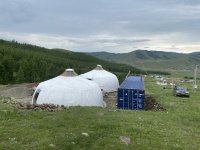
There aren’t any codes in Mongolia in the countryside. There might be in the cities for apartments but there’s a lot of corruption so I’m not sure about enforcement. There are standard building practices or traditions. Gers (yurts) are everywhere but I’ve never seen any lightning systems on them. They tend to erect them in valleys away from trees. Whereas we built ours up a high valley close to forests and mountain peaks. It is very prone to storms and lightning.

The whole system wasn’t expensive. I’ve spent about US$150 on parts. So I consider it a low cost for reasonable protection against a catastrophe.

The electrician who connected us to the grid said we didn’t need lightning protection because our nearest pole has a lightning system built in. However, my research indicates it’s too far away to give us a “cone of protection”. It’s about 15-20 metres from the closest ger and lower downhill.

I’m not sure if you can see my photo from a nearby hill but if you can, you should see our location on the far right of the frame. Also, the electric line leading to us.
 

Attachments

  • 3D7F4EFB-23EA-494C-8639-133768F19FCA.jpeg
    3D7F4EFB-23EA-494C-8639-133768F19FCA.jpeg
    3.6 MB · Views: 535
Last edited:
Kath was rattled but otherwise fine. CRAACK BOOOOOM I jumped out of bed pissed wanting to kick some lightning azz. ha "WTFH!!!" lol

Beautiful country for sure. Thanks for photo.
 

Systems as shown in the diagram I´ve seen in army camps & the staff areas of refugees camps.

Searched a little bit in my knowledge collection and found that - just for completing information:

Blitzschutz-Armeezeltlager-1.jpg


Army_DeployableLightningProtection_Flyer:
https://workupload.com/file/6wbpnE9GXfH
 
What I've heard about lightning is that you should expect it to strike pretty much anywhere and the goal is to deflect the energy away from sensitive stuff. Lightning has to go to ground (actually, I think it actually goes ground to cloud, how crazy is that!). You can keep potentials from forming by bonding what you can, which means connecting with copper to your easiest path to ground (the ground rod, in above examples). I bond anything conductive and I cross my fingers for all the non-conductive stuff because it can't be bonded.

If you're worried about it, consult an expert in lightning protection. This forum is no substitute.
 
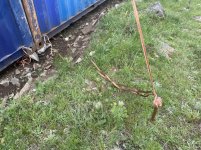
Our LPS (lightning protection system) is operational but not quite finished. The hardest part and still not 100% satisfactory was driving the 1 metre long grounding rods into the ground. I was able to get one of them 80-90cm into the earth. We live on clay and rock soil. Loads of rocks. You're guaranteed to hit a rock within a short depth. I may need to get a long concrete drill bit and a hammer drill to drive a deeper hole. Then add 2 more ground rods. I wanted to spread the earth to 3 ground rods but I can't get the others in deep enough until I get better tools.

I also grounded my 2 containers with vise grips for now. I sanded the "corten" steel smooth down to bare metal before I clamped the grounding wires.

On my next trip to the city, I'll get some better copper clamps so I can have my vise grips back.

IMG_2069.jpg

Some wider views of the LPS. Ideally the "air terminals" would be on extension rods to raise them another metre or so. I'll see if they are available.

IMG_2068.JPG

IMG_2067.JPG
 
Last edited:
Our LPS (lightning protection system) is operational.....

Yes - it looks like - :cool: - but I´m crossing the fingers for you, that you´ll never need it, because a lightning, so close to an tent construction, will make terrible noise and you can expect an great shock for all people & animals in the Yurt.... :eek:
 
I had the same problem at camp. I ended up running multiple rods at various lengths and then bonding them together with copper. It was the best I could do.
 
Yes - it looks like - :cool: - but I´m crossing the fingers for you, that you´ll never need it, because a lightning, so close to an tent construction, will make terrible noise and you can expect an great shock for all people & animals in the Yurt.... :eek:

I've been close to lightning strikes already. It's very, very scary. There's no warning. Just a very loud explosion. Once was on the motorway in the UK. The other was recently. My cat was terrified (so was I) and her heart was beating like crazy. I could feel it next to my leg.

@Jafo yes, the soil is frustrating. Just digging small holes with manual tools is extremely difficult. It's not bedrock, it's just rocky soil mixed with clay. I really need some better power tools. However, I can't justify a tool only for a single job. It needs to be generally useful for many purposes. A hammer/demolition drill is probably something I could use for many purposes. The long concrete drill bit is something I can use too.

I really want to have 3 grounding rods to have the best earthing of my system.
 
Back
Top